Should It Go in the Basement or Go Away? A Homeowner’s Decision Guide
By White Oak Junk Removal
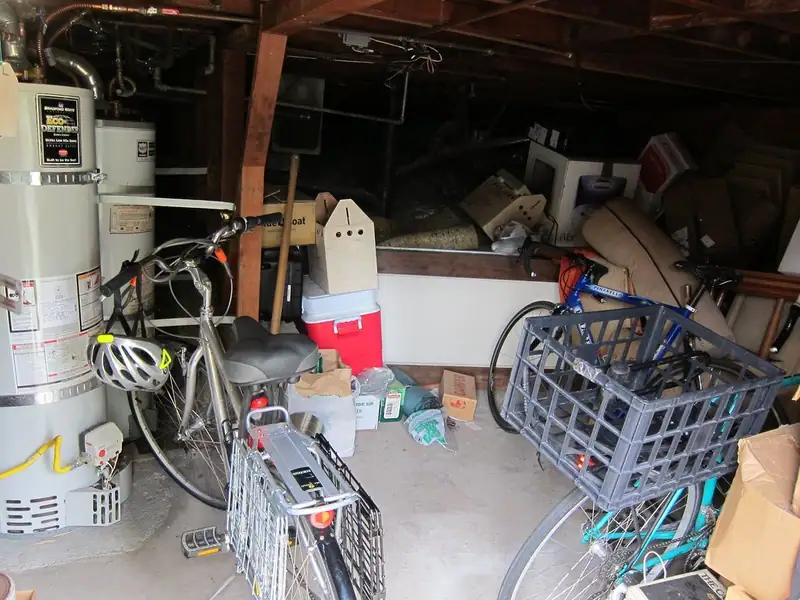
A basement can be useful storage, but it is also where delayed decisions tend to pile up: boxes from a move, broken furniture waiting for repair, old paint, childhood items, holiday decorations, and things nobody wants to deal with. Before carrying another item downstairs, decide whether you would realistically look for it, use it, or pay to replace it within the next year.
Start with the basement itself
Not every basement is a safe long-term storage space. If yours has had water seepage, flooding, persistent dampness, mold, or pests, be selective. Paper, fabric, cardboard, particleboard furniture, electronics, photographs, and mattresses can be damaged quickly in a damp basement. Putting them in a box does not protect them if the room stays humid or water reaches the floor.
Check the practical conditions before storing anything: look for water stains on walls or floors, musty smells, exposed foundation cracks, insect activity, and boxes sitting directly on concrete. If you do keep items downstairs, use sealed plastic bins for items that can tolerate temperature changes, label them clearly, and set them on shelving or risers rather than on the floor.
Keep it if it has a specific use and a specific place
Storage makes sense when an item is useful, in workable condition, and has a defined home. Seasonal tools, holiday decorations you actually put up, camping gear used every year, spare parts for an appliance you still own, and records you need to retain are reasonable candidates.
A good test is simple: name the occasion when you will use the item next. “When we repaint the guest room this fall” is a plan. “It might come in handy someday” is usually a reason to postpone a decision. If you cannot identify a likely use, the item is taking up space rather than serving you.
- Store it when it works, you use it at least occasionally, and it is appropriate for basement conditions.
- Store it when replacing it would be difficult or expensive and you have protected space for it.
- Let it go when it is broken, incomplete, expired, water-damaged, or has gone unused through several realistic opportunities to use it.
- Let it go when you are keeping multiple versions of the same item without a clear reason.
Do not use storage to hide a repair decision
Some belongings are not clutter; they are unfinished projects. A chair with a loose leg, a lamp missing a shade, or a bike needing a tire may be worth fixing if the repair is small and you will use the item afterward. Put a deadline on it. If you will not repair it within 30 days, decide whether to donate it as-is, recycle it, or dispose of it according to local rules.
Be especially careful with items that create hazards. Old paint, solvents, pesticides, gasoline, propane cylinders, batteries, fluorescent bulbs, and electronics should not be tossed casually into household trash or left indefinitely in a basement. These materials may need a designated collection program or a disposal method set by your local municipality.
Use the box test for sentimental items
Sentimental belongings need a different standard. You do not have to use a family photograph, a letter, or a child’s artwork for it to matter. But sentimental storage still needs limits. Choose a defined number of bins, albums, or shelves for each category. Keep the best examples rather than every example, and photograph bulky objects before letting them go if the memory matters more than the object.
For inherited items, ask whether you are preserving the item itself or avoiding a difficult decision. If another family member would genuinely value it, offer it directly. If nobody wants it and it has no practical role in your home, passing it to a donation center, consignment shop, or appropriate nonprofit can be a better outcome than leaving it in a damp box for years.
A workable DIY basement cleanout
Do not empty the entire basement into the yard or driveway unless you have a clear plan to finish that day. Work one zone at a time: a shelving unit, one wall, or a group of boxes. Make four destinations: keep upstairs, keep in basement, donate or sell, and dispose of. As you touch each item, make one decision and move it to its destination.
- Clear a small work area and bring gloves, trash bags, labels, and a marker.
- Start with visible trash, empty boxes, and items that are clearly damaged.
- Open one container at a time. Avoid creating a new pile before sorting the first one.
- Label every bin you keep with its contents and the month or year it was reviewed.
- Set aside donations promptly. If they remain in the basement for months, they are still clutter.
- Leave clear access to utilities, the electrical panel, sump pump, furnace, and water shutoff.
When a professional is the safer choice
Hire help when the job is beyond a normal sorting project. That includes a basement affected by flooding or sewage backup, visible mold over a large area, heavy debris, animal waste, sharp materials, unknown chemicals, or furniture and appliances that cannot be moved safely. A professional cleanout crew can handle the labor and hauling; water, mold, or contamination may require a restoration or remediation specialist instead.
Professional help also makes sense when the basement has become too full to sort safely, when stairs are steep, or when the work will take more physical effort than your household can manage. The goal is not merely to make room. It is to leave a basement that is dry, accessible, and safe to use the next time something needs attention.