Preparing a shed, deck, or room for light demolition in Apex, NC
By White Oak Junk Removal
The shed is leaning, the deck boards are soft around the steps, or a room is stripped halfway through and covered in old material. You need the broken structure gone, but first you need to know what a light demolition crew can actually take down and what you need to settle before work starts.
For many Apex properties, the job is less about swinging a hammer than getting the material out safely. Older homes near Salem Street can have tight walks and narrow routes from the backyard. Newer homes around Beaver Creek may have a longer path from the work area to the driveway. Either way, boards, nails, posts, and torn-out material still have to be loaded and hauled off.
The scope starts with the structure itself
Light demolition covers smaller structures and selected parts of a property, rather than a whole-house teardown. For a shed, that can mean emptying it, taking down the walls and roof, removing the floor, dealing with slab-mounted anchors, and hauling away the remains. If the shed holds paint, old tools, boxes, or a refrigerator, point those items out during the estimate so the crew can see the full job.
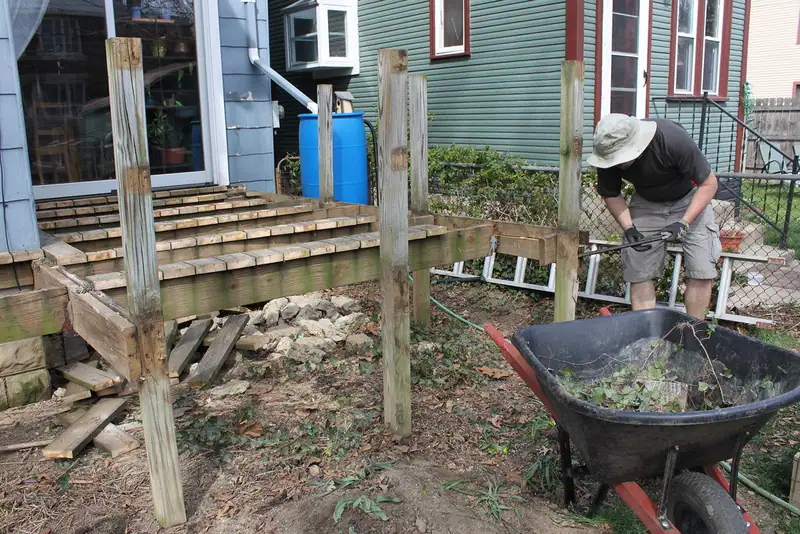
Deck work can include the surface boards, framing, rails, and stairs. Posts and footings need a closer look because they are often set into the ground or concrete. The removal plan may involve pulling footings or cutting posts, depending on what is there and what you want left for the next project. A crew should see the attachment points near the house before anyone agrees on the scope.
Interior tear-outs are more specific than the phrase makes them sound. White Oak Junk Removal lists interior and structure tear-outs, but the exact work needs to be discussed in person. Show the crew the room, identify what stays, and explain whether the next contractor needs the area cleared to framing, cleared of old fixtures, or simply emptied of demolition debris.
- For a shed: identify stored contents, electrical connections, anchors, and anything you want kept.
- For a deck: point out stairs, railings, post locations, connections to the house, and the condition of the framing.
- For an interior tear-out: mark what remains, what comes out, and any routes through the house that need to stay clear.
- For any job: mention gates, stairs, narrow side yards, parked vehicles, and materials already piled elsewhere on the property.
A quick check before demolition prevents the usual surprises
Walk the area once before the estimate. Pull out personal items from a shed, check under deck stairs, and look through the room for things that got set aside during a remodel. This is not about making the site spotless. It gives you a chance to separate the few items you want to keep from the material that is actually leaving.
Utilities deserve a direct conversation. If a structure has power, water, gas, or another active connection, say so before the job is scheduled. Some work may need to be disconnected or handled by the appropriate trade first. Do not assume a wire running to an old shed is dead because the light stopped working years ago.
Think about the finished condition you expect, too. A deck demolition can leave a different result than a deck replacement project. If you are planning a new patio, a screened porch, or another build, tell the crew what the next contractor needs. The on-site visit is the place to settle whether posts, footings, anchors, and loose debris are part of the removal plan.
DIY makes sense on some small jobs
A homeowner with a truck, the right tools, and an open afternoon can handle a small freestanding item in decent condition. Taking apart a simple section of fence or clearing a small pile of already-loose material may be manageable. You still need a legal place to take the load, a way to secure it, and a plan for sharp fasteners.
But a rotted deck, a leaning shed, or a half-torn interior creates a different kind of work. Material does not always come apart in the order you expect. A board can be holding more weight than it appears to hold, and old nails turn a driveway or yard into a cleanup job of its own. Hauling several loads after the teardown can also take longer than the demolition itself.
Calling a crew is reasonable when the structure is unstable, access is tight, debris is already spread across the property, or the work needs to move on a short schedule. It also helps when the project involves more than demolition. A garage cleanout, shed teardown, and debris haul can be looked at together instead of treated as separate problems.
The estimate sets the plan before work begins
White Oak Junk Removal serves Apex and the rest of Wake County. The company is locally owned by owner-operator Brent Ward, and its demolition service covers sheds, decks, fencing, and interior structures, with cleanup and haul-away included in the work described on its site. The crew is insured, and same-day availability is often possible when the schedule allows.
Pricing is handled with a free on-site estimate. The crew looks at the structure, access, debris, and the work you want completed, then gives an upfront price before work starts. There is no need to guess at a load size or try to assign a price to a pile of lumber from a photo.
After loading, the company says it donates and recycles what it reasonably can rather than defaulting to the landfill, with the remaining material disposed of as needed. For demolition, the practical point is simpler: the job includes clearing the debris so you are not left with a driveway full of broken boards, metal, and hardware after the structure comes down.
Call White Oak Junk Removal at (919) 801-8331 to arrange a free on-site estimate for your Apex demolition project.