What it really takes to tear down an old shed or deck in Apex, NC
By White Oak Junk Removal
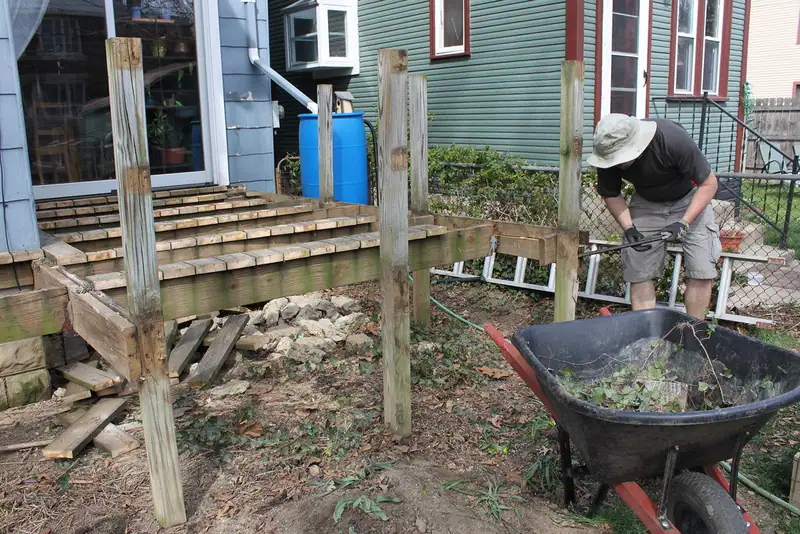
The shed door has sagged off its hinges, the floor is soft near the back wall, and every hard rain sends water through the roof. Or the deck has loose rails, tired boards, and steps that no one wants to use. Taking it down can be the sensible call, but the work involves more than knocking over a few walls and leaving a pile at the curb.
A small, freestanding shed with no power, no plumbing, and clear access may be a manageable weekend project for someone with the tools, a truck, and a place to take the debris. An attached deck, a larger shed, or anything with electrical service deserves a slower look before work starts. The tear-down itself is only part of the job. The debris, nails, footing material, access through the yard, and local requirements are the rest of it.
Start with the structure and the property
Walk around the shed or deck before moving anything. Look for power running to a shed, exterior outlets or lights on a deck, gas lines nearby, water spigots, attached roofs, and sections tied directly into the house. If there is electrical service, have it properly disconnected before demolition begins. Do not treat a wire that looks unused as harmless.
Then look at how the crew, tools, and debris will move. A deck behind a fenced backyard may require a path through a side gate. A shed set near a property line, a drainage area, or an easement may limit where material can be staged. If your property has an HOA, check its rules before scheduling work, especially if the removal is part of a larger replacement project.
Apex lists decks and accessory buildings among the typical projects that require permits and inspections. The Town also provides a demolition permit application for work that must happen before a new building permit is issued or where no new building permit is planned. Permit questions should go to Apex Building Inspections and Permitting, because the right path depends on the specific structure and what will replace it.
A controlled tear-down keeps the pile from becoming the problem
A good tear-down works from the loose and light parts toward the pieces still carrying weight. Remove stored items first. Take off doors, loose trim, and roofing material where appropriate, then dismantle walls, rails, decking, framing, and any remaining base in a controlled order. A deck connected to the house needs particular care around the ledger area, siding, and exterior finishes.
This is where a job can change quickly. Rotten lumber may break apart easily, while wet framing can be heavier than it looks. A shed may have buried anchors or a concrete slab. Deck posts may be set in concrete. And every board seems to have more nails than expected once it is lying in the grass.
Before starting, it helps to settle a few practical details:
- Whether the shed has electrical service or the deck has lights, outlets, or other connections
- Whether the structure is attached to the house, built over a slope, or near a fence, easement, or landscaping you need to protect
- Whether gates, stairs, or a narrow side yard will limit removal access
- Whether footings, a slab, or other base material need to be removed along with the structure
- Where the wood, shingles, metal, fasteners, and other debris will go once they are loaded
If you are doing the work yourself, a clean staging area and regular loading make a difference. Leaving a growing heap of lumber in the yard creates puncture hazards, blocks access, and gives rain time to soak the material. Keep children and pets away from the work area, and do not burn demolition debris.
Curbside pickup usually will not take the demolition pile
Apex offers bulk item collection for certain large household items placed at the curb. It does not accept construction, demolition, or remodeling materials, and collection staff do not enter private property. An old deck or shed is therefore not a curbside bulk-pickup job, even after it has been reduced to boards and bags.
That leaves two honest paths. You can break it down, load it yourself, and take responsibility for the disposal route. Or you can have a removal crew handle the dismantling, loading, and haul-away. The first route can make sense for a very small structure when you already have the equipment, time, and disposal plan. The second becomes practical when the work involves heavy material, tight access, attached framing, or a deadline tied to a sale, renovation, or tenant turnover.
For a light demolition job, White Oak Junk Removal can take down sheds, decks, fencing, and interior structures, then handle the cleanup and haul-away. The crew can inspect the work in person, explain what the job involves, and give a free on-site estimate before work begins. Pricing is upfront with no hidden fees, so the estimate is where the condition of the structure, the amount of debris, access, and any base removal get settled.
The job is finished after the debris is gone
The last boards coming down does not mean the job is done. Nails need to be collected, loose debris needs to be cleared, and the remaining ground or concrete needs to be visible enough for you to decide what happens next. If a new shed, patio, or deck is planned, keep that next project in mind before removing footings or disturbing nearby landscaping.
White Oak Junk Removal is based in Garner and serves Apex along with Wake County. The company says its insured team handles the lifting, carrying, loading, and cleanup, often with same-day service available. Material is donated or recycled where reasonably possible, with the remainder taken for disposal.
For an old shed or deck in Apex, call or text White Oak Junk Removal at (919) 801-8331 to arrange a free on-site estimate with owner-operator Brent Ward.